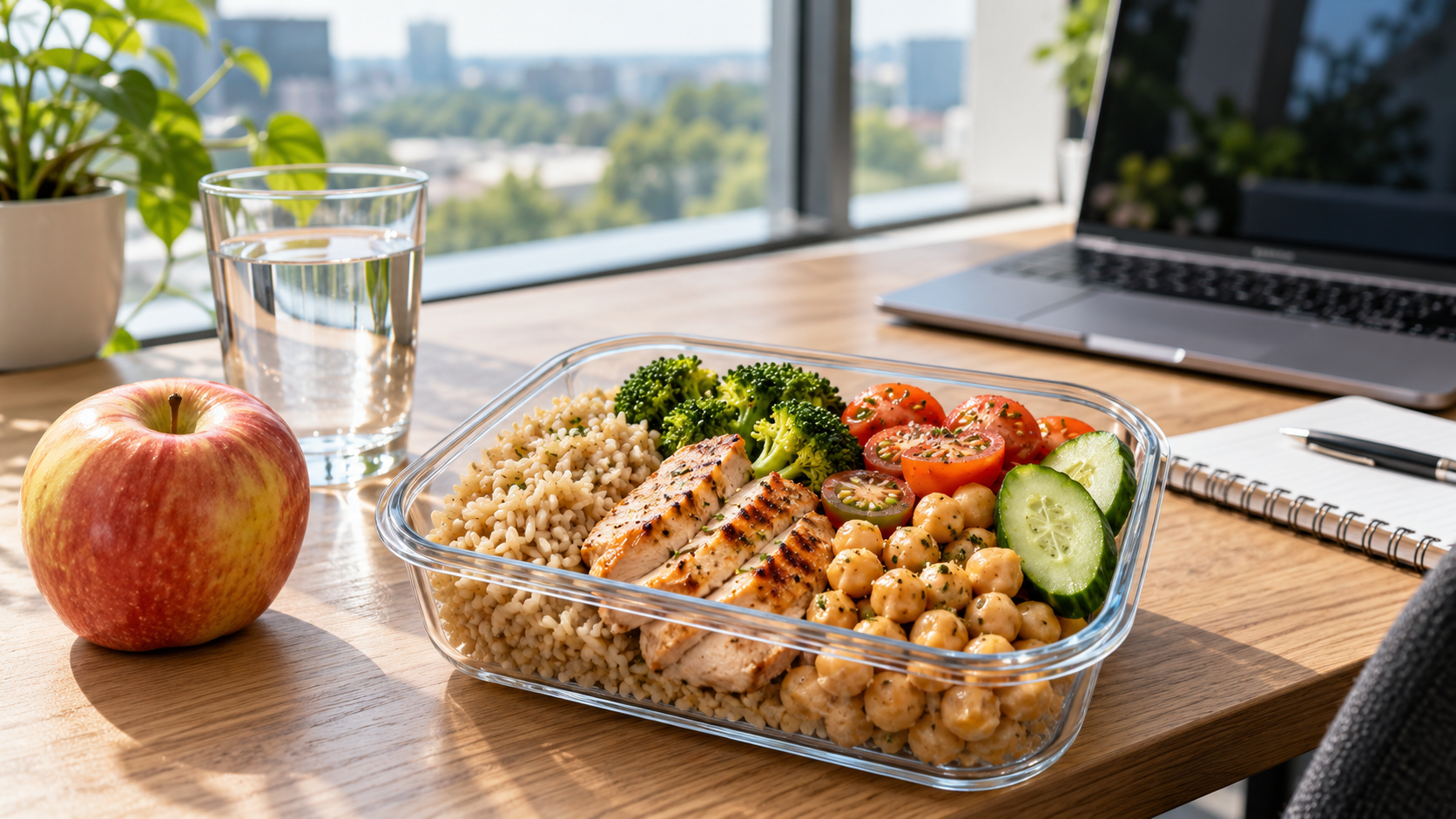
A healthy diet for office workers starts with small food choices that fit a busy day. When emails, calls, and meetings fill your schedule, meals can become an afterthought. You might grab biscuits for breakfast, delay lunch, or buy whatever is nearby.
Eating well at work does not need to be costly or hard. Everyday foods, such as oats, eggs, beans, rice, fruit, and vegetables, can form useful meals.
This guide explains how to plan office meals, choose snacks, and make better drink choices. The aim is to build a food routine that is simple enough to follow during a normal working week.
What Makes a Healthy Office Diet?
Office workers need the same basic food groups as other adults. A desk job does not create a need for special powders, costly snacks, or strict food rules.
A balanced diet includes vegetables, fruit, whole grains, protein foods, and some healthy fats. Milk, yogurt, or suitable alternatives can also help meet your needs.
The amount you need depends on your body, age, activity, and health. Two people working at nearby desks may need different portions.
Variety matters because different foods provide different nutrients. These are the useful parts of food that help your body work well. No single food supplies everything you need.
Make Breakfast Easy to Manage
If you eat breakfast, choose something that works with your morning schedule. Preparing it ahead can make a rushed start easier.
Try one of these combinations:
- Oats with plain yogurt and chopped apple.
- Wholegrain toast with an egg and tomato.
- Plain yogurt with oats and a banana.
- Wholemeal roti with cooked beans and cucumber.
You can prepare overnight oats in a covered container and keep them in the fridge. Another option is to set out your bowl, spoon, and dry oats before bed.
There is no need for a large breakfast if you prefer a smaller meal. Choose an amount that suits your appetite and the time until your next meal.
Pack a Lunch With Several Food Groups
A useful office lunch brings several types of food together. Think of a grain or other starchy food, a protein food, and vegetables or fruit.
For example, pack brown rice with lentils and cooked carrots. Another option is a wholegrain sandwich with chicken, lettuce, and tomato, plus a piece of fruit.
Try these simple lunch ideas:
- Chickpeas, chopped cucumber, tomato, and wholemeal bread.
- Wholewheat pasta with beans and mixed vegetables.
- Roti with lentil curry and a vegetable side.
- Tofu with rice and cooked broccoli.
You do not need a perfect balance in every lunch. What you eat across the day and week matters too.
Include Different Protein Foods
Protein helps your body build and repair tissues. Office meals can include protein from both plant and animal foods.
Beans, lentils, eggs, fish, chicken, tofu, nuts, and seeds offer different ways to add it. You can change your choices across the week instead of eating the same filling every day.
For a simple weekly plan, use lentils on Monday, eggs on Tuesday, and chickpeas on Wednesday. Use foods you enjoy and can easily buy.
Keep preparation simple. Canned beans can be useful when time is short. Drain and rinse them, then add them to a salad or a cooked dish.
A basic lunch can still be varied and enjoyable.
Choose Whole Grains More Often
Whole grains provide fibre, which helps keep your bowels working normally. Examples include oats, brown rice, and wholewheat bread or pasta.
Make changes that suit your taste. You could use wholegrain bread for your office sandwich or mix brown and white rice while you get used to the texture.
There is no need to stop eating every food made with white flour. Instead, look for easy places to add more whole grains.
For example, keep oats ready for breakfast and wholegrain crackers for an occasional snack. Familiar options are often easier to use than foods that need a new recipe each time.
Add Fruit and Vegetables Throughout the Day
Fruit and vegetables provide fibre, vitamins, and minerals. Adults should aim for at least 400 grams each day, often described as about five portions. Fresh, frozen, and suitable canned choices can all help.
Spread them across your meals instead of trying to fit everything into lunch.
Add banana to breakfast, pack an orange, and include vegetables in your lunchbox. At dinner, use another vegetable you enjoy.
Make office choices easy to carry. Apples, oranges, and pears need little preparation. Washed cucumber sticks or carrots can fit into a small container.
Choose different colours and types over the week. You do not need expensive berries or rare vegetables to eat well.
Use Snacks When You Need Them
Snacks are optional. They can be useful if you feel hungry between meals, but you do not need to eat one simply because the clock says so.
Keep a few convenient choices at work:
- A piece of fresh fruit.
- A small handful of unsalted nuts.
- Plain yogurt kept cold.
- Wholegrain crackers.
- Vegetable sticks with hummus.
Having nutritious snacks available can make them easier to choose when hunger arrives.
Put your snack in a bowl or small container rather than eating straight from a large bag. This lets you see how much you have served.
If you often feel very hungry soon after lunch, review whether your lunch is large enough and includes several food groups.
Keep Water Within Reach
Water is a simple drink for the working day. Keep a bottle or glass near your desk and refill it during breaks.
The NHS suggests six to eight cups or glasses of fluid daily as a general guide. Some people need more, including those in hot places. Tea, coffee, and milk also count towards fluid intake.
Link drinking to familiar moments, such as arriving at work, having lunch, or finishing a meeting.
You do not need to force large amounts at once. Drink regularly across the day.
If you usually buy sweet drinks, try replacing one with water. Plain water with a slice of lemon can offer a different taste without needing sugar.
Check Sugar, Salt, and Sauces
Packaged office foods can vary a lot. Two soups, sandwiches, or snack bars may look similar but contain different amounts of salt, sugar, or saturated fat.
Compare labels using the same measure, such as the amount per 100 grams. Also check how much is in the portion you actually eat.
Start with foods you buy often. Compare your usual breakfast cereal, lunch soup, or afternoon snack with another option.
For homemade lunches, pack sauces separately so you can choose how much to add. Use lemon, herbs, garlic, or spices for extra flavour.
Small changes to everyday foods are more practical than trying to check every ingredient at every meal.
Plan for Canteens and Takeaways
A healthy diet for office workers can include meals bought outside the home. You can still build a varied lunch when you use a canteen or order food.
Look for a meal that includes vegetables, a protein food, and rice, bread, potatoes, or another starchy food.
For example, choose lentils with rice and a vegetable side. A chicken sandwich with salad can also be a convenient option.
If a meal comes in a very large portion, you do not have to finish it after you feel comfortably full.
Keep two or three reliable lunch choices in mind. This makes ordering easier when a busy day leaves little time to decide.
Keep Packed Food Safe
Food safety is part of eating well at work. Lunches containing meat, eggs, yogurt, and other foods that need chilling should stay cold.
Use an insulated lunch bag with at least two cold sources, such as frozen gel packs. Put your lunch in the office fridge when you arrive.
Do not leave food that needs chilling at room temperature for more than two hours. In temperatures above 32°C, the limit is one hour.
Label your container so it is easy to find in a shared fridge.
Wash reusable lunchboxes after use and let them dry. Pack clean cutlery too, so your meal is ready when your break begins.
Prepare for the Working Week
Choose a few meals before shopping. Write down the ingredients and check what you already have.
Try using one ingredient in several ways. Chickpeas can go into a salad, a curry, or a sandwich filling. Carrots can be cooked for dinner or packed as lunchbox sticks.
Prepare only what you can store safely and use in time. Freeze extra portions when needed.
Keep a simple backup lunch available, such as wholegrain crackers, an unopened shelf-stable bean pouch, and whole fruit. Follow package storage instructions.
A backup plan is helpful when you forget your lunch or an unexpected meeting changes your day.
Conclusion
A healthy diet for office workers is built through small, repeatable choices. Pack varied lunches, include fruit and vegetables, choose whole grains often, and keep water nearby. Use snacks when hungry and store packed food safely.
Start with one change that fits your schedule. You might pack fruit each morning or prepare tomorrow’s lunch after dinner. A useful eating routine should suit your taste, budget, appetite, and working day.
Read also: How to Start Blogging: An Easy Guide for Beginners