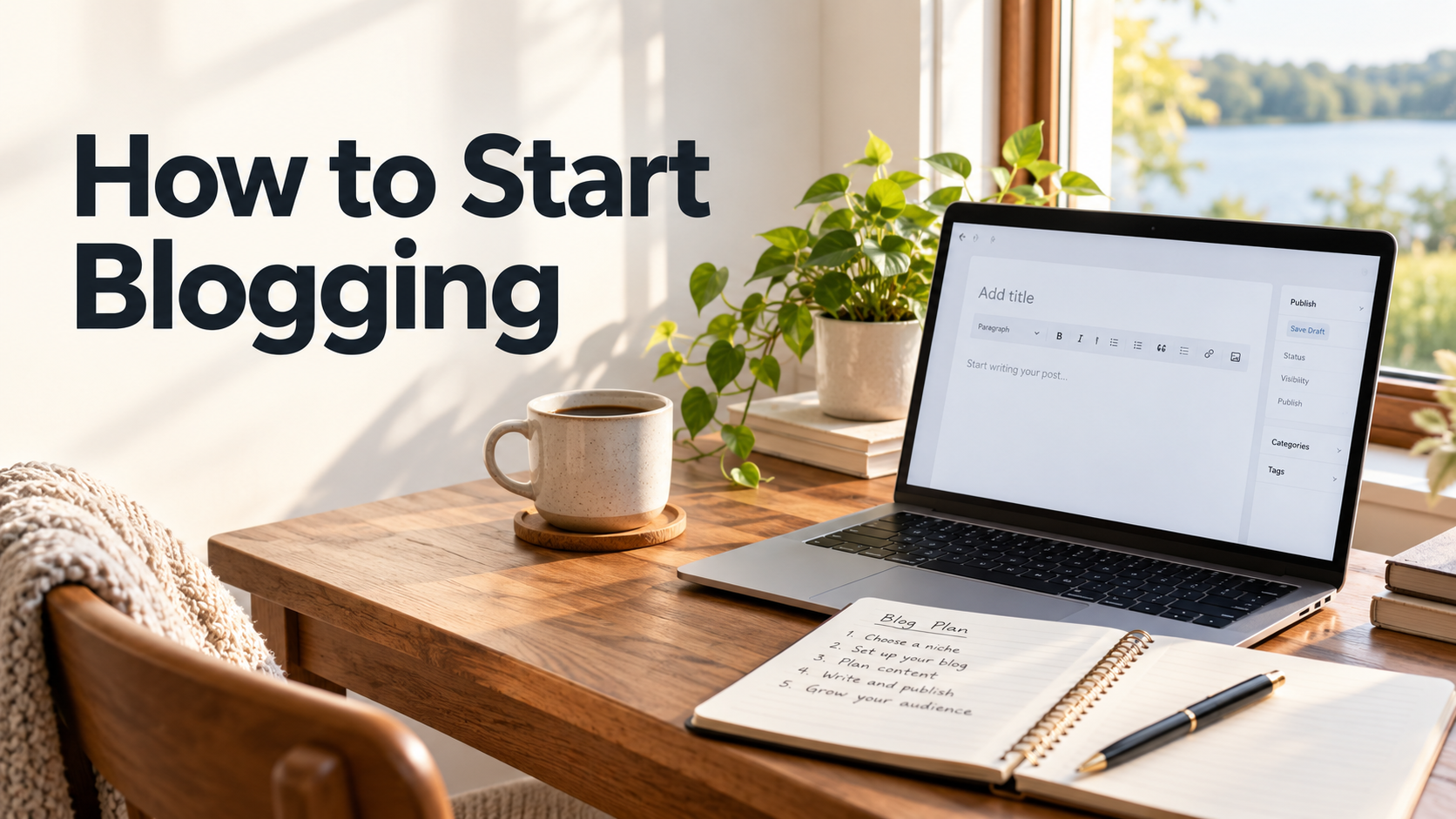
Learning how to start blogging begins with one simple idea: share something useful with other people. A blog is a website, or part of a website, where you publish articles called posts. You can use it to explain a hobby, teach a skill, or share lessons from your life.
You do not need to be a famous writer to begin. You need a clear topic, a place to publish, and time to practise. Your first post does not have to be perfect. It should help someone understand something.
This guide explains each step in simple words, so you can build your blog with a clear plan.
1. Choose a Topic You Enjoy
Start by choosing what your blog will be about. This is often called your niche. A niche simply means the main subject you write about.
For example, you could write about drawing, growing plants, or making simple meals. A clear topic helps readers know what to expect.
Ask yourself three questions:
- What do I enjoy learning about?
- What can I explain clearly?
- What questions could I help people answer?
Choose a subject you would still enjoy after writing several posts. You do not need to know everything. However, you must research anything you are unsure about and be honest about your experience.
A small, clear topic often makes planning easier. “Growing herbs in small pots” gives you a clearer starting point than “everything about plants.”
2. Decide Who You Want to Help
Before you write, picture your reader. Think about what they already know and what they need help with.
A gardening blog for beginners should explain basic words and steps. A blog for experienced gardeners can cover more complex questions.
Try finishing this sentence: “My blog helps people who want to learn how to ______.”
Your answer gives your blog a purpose.
Next, list questions those readers might ask. For a drawing blog, they might wonder which pencil to use or how to draw a face.
These questions can become your first posts. When you understand your reader, choosing useful ideas becomes much easier.
3. Pick a Name for Your Blog
Choose a name that is easy to read, say, and remember. It should fit your subject without being confusing.
Write down a few ideas. Read each one aloud. Ask someone else to spell it after hearing it.
Avoid a name that looks too similar to an existing blog or business. Check whether another website already uses it.
You may also want a domain name. This is the web address people type to visit your site.
Some blogging services give you an address that includes their name. A custom domain gives you a separate address and usually has an ongoing cost.
Keep your choice simple. A clear name is more useful than a clever name people cannot remember.
4. Choose Where Your Blog Will Live
A blogging platform is the tool you use to create and publish posts.
Some services include the writing tools and hosting together. Hosting is the service that stores your website files and makes them available online.
Other setups require you to arrange hosting separately.
Before choosing, check:
- Is the writing tool easy to use?
- What does the plan cost now and at renewal?
- Can you use your own domain?
- Can you save or export your posts?
- Does it include the features you need?
Read the current plan details carefully. Free plans may have limits, and paid plans differ.
Choose a setup that suits your budget and comfort level. You can begin with basic features.
5. Make Your Blog Easy to Read
Your blog should help people focus on your words.
Choose a simple design with clear text and enough space between sections. Use colours that make words easy to see against the background.
Check how the blog looks on a phone. Make sure visitors can read posts and use the menu without struggling.
Create an About page that explains your topic and what readers can expect.
Give visitors a clear way to find your posts. A simple menu might include Home, Blog, and About.
Only share personal details you are comfortable making public. You do not need to publish your home address or private phone number.
A useful design makes reading and finding information easy.
6. Plan Your First Few Posts
Before publishing, make a short list of article ideas. Five clear topics are enough to get started.
Each post should answer one main question.
For a beginner drawing blog, your ideas might include choosing a pencil, drawing basic shapes, and practising shading.
Keep your first topics small. “How to Draw a Simple Leaf” is easier to explain fully than “Everything About Art.”
Next, make a basic outline for each post:
- Introduce the question.
- Explain the main steps.
- Give a helpful example.
- End with a short conclusion.
An outline keeps your writing focused. It also helps you notice missing steps before you start writing full paragraphs.
7. Write Your First Blog Post
Now turn one outline into a complete article.
Start with a title that clearly explains the topic. Your introduction should tell readers what they will learn.
In the main part, explain one idea at a time. Use familiar words and short paragraphs. If you need a difficult word, explain what it means.
Imagine talking to someone who has never tried the activity before. Include the small steps that may seem obvious to you.
Use examples when they make instructions clearer. Instead of saying “water carefully,” explain how the reader can check whether the soil needs water.
Finish with a conclusion that repeats the main lesson and gives the reader a simple next step.
8. Check Facts and Use Your Own Words
Helpful blogging depends on accurate information.
Check claims before publishing them. When possible, use original sources, such as official instructions or research from the people who did the work.
Make sure a source supports the exact point you are making. Check its date if the information may change.
Write from your understanding instead of copying sentences from another article. Simply swapping a few words does not make copied writing original.
Credit sources when using their ideas, research, or exact words. Clearly mark any direct quotes.
Use your own pictures or images you have permission to use. Follow any licence rules.
Also check spelling, links, and instructions. Read the article aloud to catch confusing sentences.
9. Help Readers Understand and Find Your Posts
Search engine optimisation, or SEO, means helping search engines understand your content so it can appear in relevant searches.
Begin with a clear subject and a useful answer.
Use the main topic naturally in your title, introduction, and relevant sections. For an article about how to start blogging, that phrase helps explain the subject.
Do not repeat a keyword in every sentence. Your writing should sound natural.
Give each post a clear page title and a short meta description. A meta description summarises the page, although search engines may show different text.
Use headings to organise ideas. Link to related posts when those links help readers.
These steps support a clear website, but they do not guarantee search rankings.
10. Publish, Share, and Keep Learning
Before pressing Publish, preview your post. Check the headings, spacing, images, and links.
Once it is live, read it again on your phone.
Share the link where the topic is welcome. You might send it to someone who asked that question or share it in a group that allows relevant links.
Avoid posting the same link everywhere.
Choose a writing schedule you can manage. One useful post each week or month can be a reasonable starting point.
Pay attention to reader questions. They can show you what needs a clearer explanation or suggest your next topic.
Update older posts when facts change or you find a mistake. Blogging improves through practice, feedback, and steady care.
Keep a safe copy of your writing and any pictures you created. Check how your chosen platform handles backups, so you know what you can recover if something goes wrong.
After your first few posts, review what you have learned. Which topics were easiest to explain? Which questions did readers still have? Use those answers to shape your next articles. You do not need to change everything at once. Improve one small thing, such as clearer titles or better examples, each time you publish a new post.
Conclusion
Understanding how to start blogging is about taking a few clear steps. Choose a topic you enjoy, decide who you want to help, and select a suitable place to publish. Then build a readable website and write posts that answer real questions.
Keep your language simple, check your facts, and use your own words. Publish at a pace you can maintain and improve your work as you learn.
Start with one useful article. Give it a clear title, explain the subject carefully, and help your reader take the next step.